
Central SA
Inventor seeks support to develop health-monitoring device─── SIYAKHOLWA MBATYAZWA 11:46 Fri, 09 Oct 2026

A Bloemfontein developer is looking for a partner to help him turn his driver-monitoring concept into reality, which could have a major impact on road safety.
iDriS developer Bernard Eugene Seekoei says his non-contact monitoring device is designed to track drivers’ heart rates, breathing patterns and signs of fatigue in an effort to improve road safety. “The device monitors the driver from the moment they sit down. The sensors pick up subtle chest movements to measure heart rate and breathing.”
The idea behind the device was inspired by an accident involving Seekoei’s brother-in-law, who suffered a stroke that led to an accident, and he never fully recovered. The experience prompted Seekoei to explore ways of detecting potential health abnormalities earlier to help prevent road accidents and related fatalities.
Seekoei says the device is in its second phase of development. The design is completed, but a working prototype still needs to be built.
“I couldn’t find a partner to help us build the prototype. We approached CUT, but they said it was not their speciality and referred us to TUT.
“TUT conducted a feasibility study and sent us a report explaining that they would not be able to build the prototype because it requires extensive software development, and they do not have the capacity for that.”
Moving the project forward would require assembling the device’s components, developing the casing, and, most importantly, programming the system and integrating the necessary algorithms to enable it to function as intended.
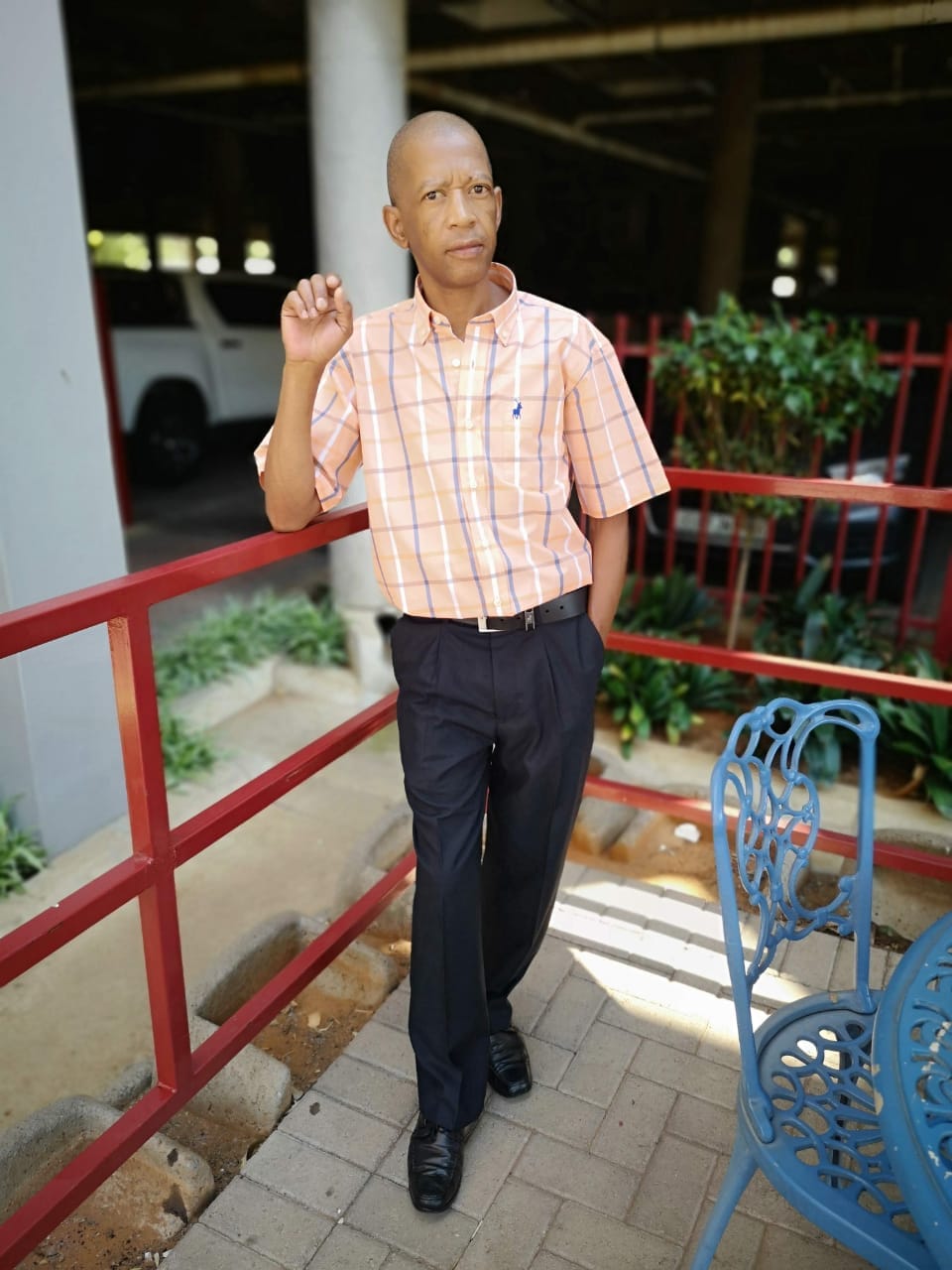
iDriS developer Bernard Eugene Seekoei. Photo supplied
“What is required right now is a partner who is already in the medical device manufacturing sector. I have written to the Council for Scientific and Industrial Research (CSIR), requesting an opportunity to pitch the project to them, but up to this point, I haven’t received any response.”
iDriS differs from existing health-monitoring devices used in hospitals because it is designed to operate without being attached to the body. “Existing devices used in hospitals are wearables. They are attached to the body, whereas iDriS is a non-contact device.”

Seekoei is appealing to research institutions and companies in the medical-device manufacturing sector to collaborate with him to develop and test a working prototype.
Research materials he has consulted support the feasibility of the concept, but the device still needs to be developed into a functional prototype before its intended capabilities can be tested.
OFM News/Siyakholwa Mbatyazwa sm
• Have a news tip to share? Phone or whatsapp the OFM News Hotline on 066 487 1427.