
South Africa
More than 1,000 free cataract surgeries planned─── ZENANDE MPAME 11:04 Mon, 29 Sep 2025

This Eyecare Awareness Month, experts are sounding the alarm about a health crisis: The rapid rise of type 2 diabetes and its direct link to cataracts, the world’s leading cause of preventable blindness.
Through the Right to Sight Trust, an initiative of the Ophthalmological Society of South Africa (OSSA), more than a thousand free cataract surgeries will be performed this year. Of these, around 700 procedures are scheduled during Eyecare Awareness Month, observed from 20 September to 17 October.
This nationwide initiative is made possible by 109 ophthalmologists in private practice who donate their time and expertise, supported by 35 private hospitals that provide free theatre time and essential services.
Experts warn without broader awareness, early screening, and expanded access to care, the number of people losing their sight unnecessarily will continue to rise.
“Cataracts can be treated with a simple and very successful surgery. The challenge is not the disease itself, but the barriers to getting care,” said OSSA member Dr Mpopi Lenake. Many people live far from hospitals, and waiting lists in the public sector are long.
“Sometimes there are simply not enough eye specialists to meet the growing demand. On top of that, some patients don’t know cataracts are curable, or they fear surgery and wait until it’s too late.
“So, while cataracts are treatable, unequal access, limited resources, and lack of awareness mean too many South Africans still lose their sight unnecessarily.”
People are encouraged to protect their eye health by:
- protecting eyes from UV rays with sunglasses and hats;
- managing diabetes risks with healthy lifestyle choices and regular check-ups;
- scheduling eye exams every two years after 40, and annually after 65;
- eating a nutrient-rich diet including leafy greens, fruits, nuts, and whole grains;
- seeking immediate care if vision loss interferes with daily activities; and
- quitting smoking.
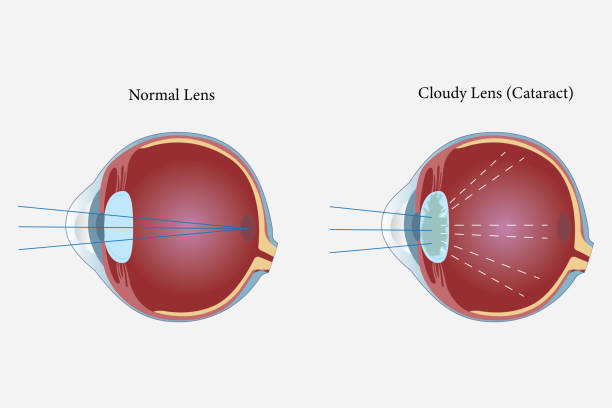
The difference between a normal lens and one with a cataract. Photo: iStock
People living with diabetes face double the risk of developing cataracts, a condition where high blood sugar causes protein changes in the eye’s lens, leading to clouding, deteriorating vision, and ultimately blindness if untreated.
Signs of cataracts may include:
- double vision or ghosted images;
- cloudy or blurred vision, as if looking through a dirty window;
- needing brighter light for reading;
- seeing halos around lights;
- difficulty with night vision or driving at night; and
- sensitivity to light and glare.