
Business
South Africa’s 7.6km iron ore train sets new milestone─── SIYAKHOLWA MBATYAZWA 13:56 Mon, 26 Oct 2026
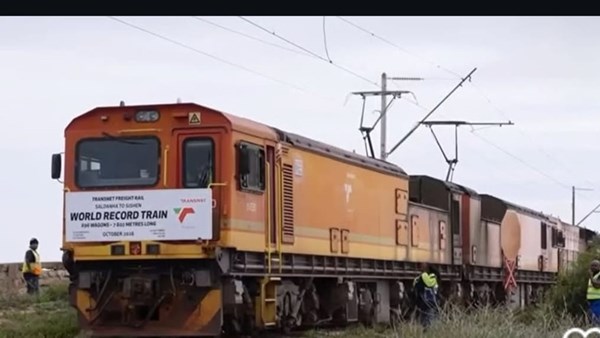
South Africa’s freight rail network has reached a remarkable milestone with the successful operation of a 7.6-kilometre-long iron ore train between Sishen in the Northern Cape and the Port of Saldanha.
Consisting of 696 wagons, the train was effectively the equivalent of two standard 348-wagon iron ore trains coupled together. This makes it one of the longest freight trains ever tested on the corridor.
“The operation of the train has provided valuable engineering data that could help improve freight rail efficiency and the recovery of operations after disruptions,” said Transnet principal engineer Wynand Botha.
Before the operation, Transnet conducted theoretical assessments and simulations to understand how a train of this length would behave. The assessments considered traction requirements, braking, forces throughout the train, locomotive positioning, train handling, and the infrastructure along the route.
Botha said operating a train of this length required careful logistical planning, as the existing infrastructure was not designed for trains stretching 7.6km. Assembling the train, inspecting the wagons, moving it along the corridor, and eventually splitting it required detailed planning and coordination.
One key technology was radio distributed power (RDP), which lets locomotives at different points along the train operate in a coordinated way, rather than concentrating all the locomotive power at the front.
“RDP allowed us to better manage the traction and braking forces throughout the length of the train, which becomes extremely important when dealing with a train that is sp long.”
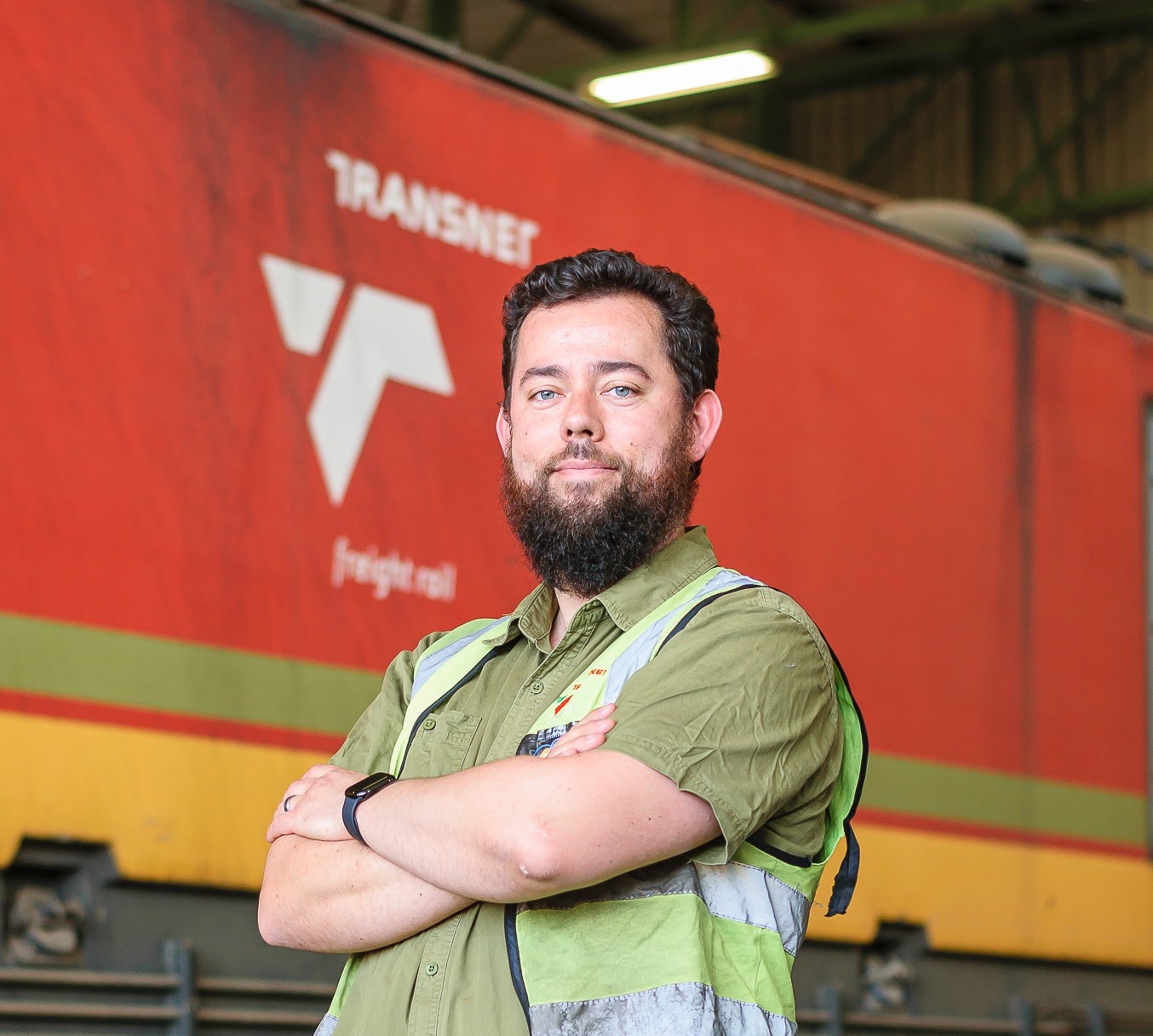
Transnet principal engineer Wynand Botha. Photo supplied
The operation used eight 15E electric locomotives and four 43-class diesel-electric locomotives. Some locomotives were isolated to balance resources and return them to the loading siding alongside the 696 empty wagons.
“The technology alone doesn’t make the operation possible. It requires experienced RDP crew members, operational coordination and technical specialists monitoring the train throughout the journey.”
The operation aimed to investigate whether more empty wagons could be moved from the port towards the mines using fewer trains when recovering from disruptions after a shutdown.
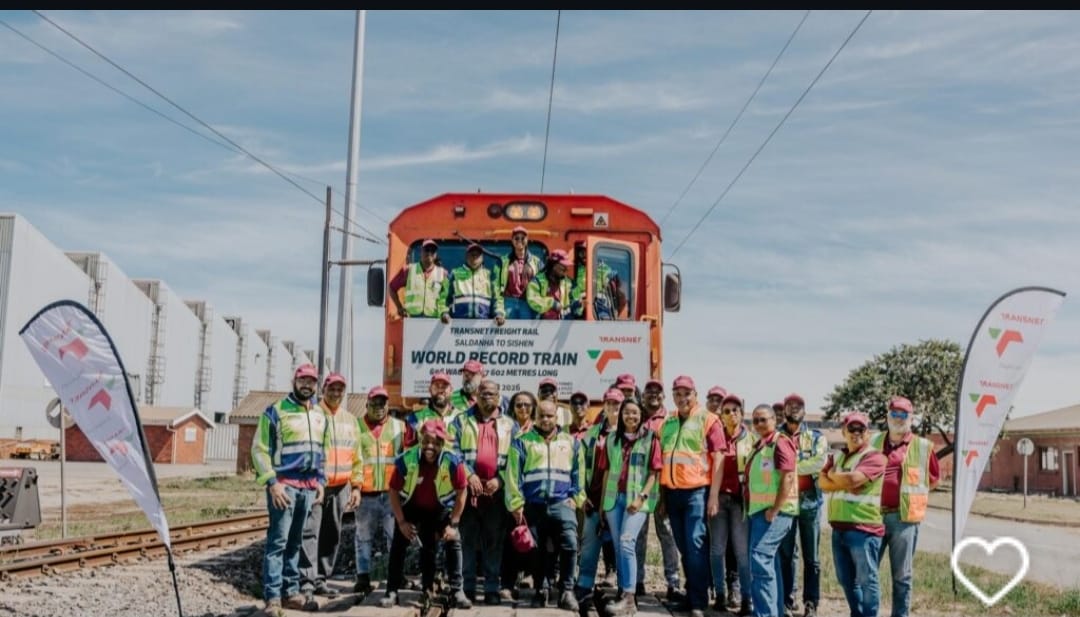
Saldanha iron ore train stretches 7.6 km. Photo: Instagram
“The exercise gives us valuable real-world engineering data to better understand what may be possible when optimising empty train movements and recovering operations after disruptions.” The operation was a once-off dynamic engineering evaluation and did not mean trains of this size would become part of regular operations.
“The train itself demonstrates what is technically possible. But regular operations are a different question. To make trains approaching this scale part of normal operations, the entire railway system would have to support them, not just the locomotives and wagons.”

He identified infrastructure length as one of the main constraints, explaining that existing railway infrastructure was not designed to accommodate trains of this size.
“Our lines were not built for trains of this length. During our planning, we had to make special arrangements because normal yard and loop infrastructure is designed around existing commercial trains.” Studies into longer trains on the ore line had similarly identified yards and passing loops as constraints.
Botha said making longer trains part of regular operations would require consideration of yard and loop lengths, signalling, train control arrangements, traction power, locomotive and wagon availability, braking performance, maintenance, crew requirements, and the impact on other rail traffic.
OFM News/Siyakholwa Mbatyazwa dg
• Have a news tip to share? Phone or whatsapp the OFM News Hotline 066 487 1427.



