
South Africa
Breast Cancer Month: Early detection saves lives─── ZENANDE MPAME 12:00 Thu, 23 Oct 2025

Early detection and regular self-examination remain vital in the fight against breast cancer.
As South Africa marks Breast Cancer Awareness Month this October, health experts urge women and men to make monthly breast checks and routine screenings part of their health habits. This year’s theme, Every Story is Unique, Every Journey Matters, highlights the need for compassionate, timely, and quality care for all, said the World Health Organisation.
People can take charge by performing monthly self-exams to learn what is normal, by scheduling routine screenings, adopting a healthy lifestyle, and knowing their family history.
Taking five minutes every 30 days for a self-exam can significantly improve the chances of identifying warning signs early, when treatment is most effective.
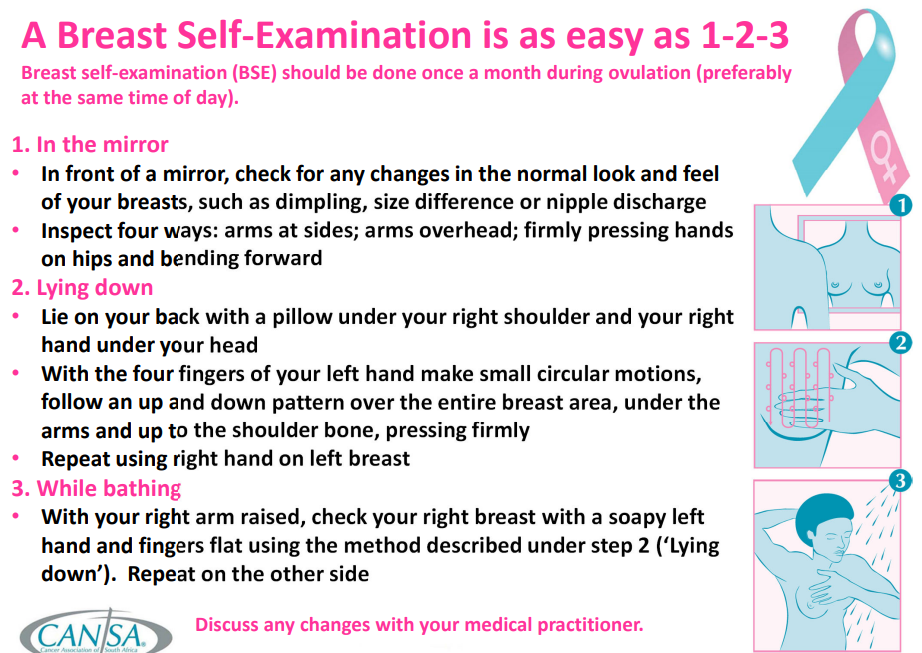
A breast examination should be done once a month. Photo: cansa.org.za
With medical advances, improved screening tools, and growing awareness, survival rates continue to rise.
“For many of us who’ve faced breast cancer, early detection made all the difference,” said Breast Health Foundation COO Jenna Skews. “Breast awareness is where it starts, but action changes lives.
“Checking your breasts every month is a small act with a powerful impact. When you know your normal, you’re in a stronger position to notice change. It’s a habit of hope, strength, and survival.”
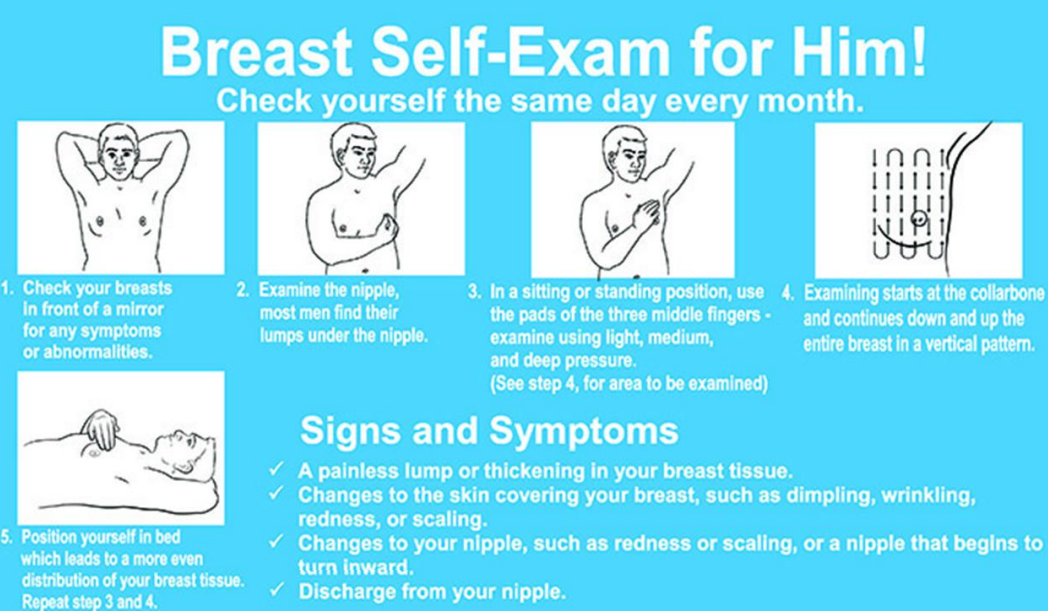
Men should also self-examine every month. Photo: malebreastcancerhappens.org
More than 19.4 million South African women over 15 are at risk, according to Cansa. When detected early, the survival rate is as high as 99%.
Psychologists note that new behaviours become habits after consistent repetition. Linking your self-check to a monthly cue, such as the first day of the month or your cycle, can help make it routine.
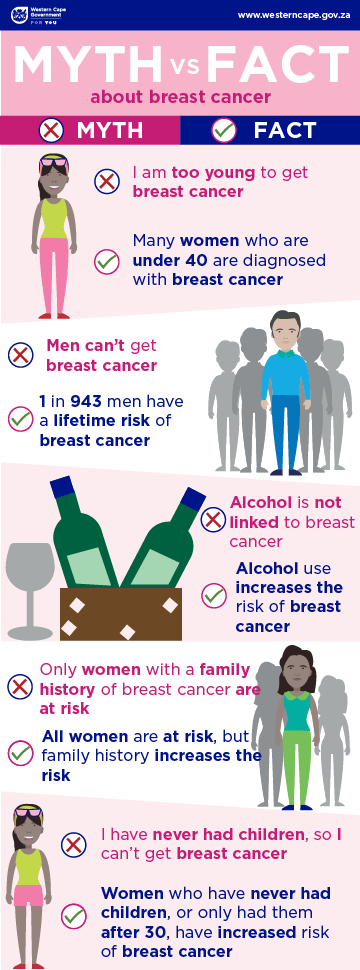
Myths and facts surrounding breast cancer. Photo: westerncape.gov.za
Warning signs to look out for:
- a new lump or thickened tissue in the breast or underarm;
- nipple inversion or flattening;
- skin colour changes or darker patches;
- changes in breast size, shape, or contour;
- dimpling or “orange peel” texture on the skin;
- scaling or flaking of the nipple or breast skin; and
- an unexplained nipple discharge, especially if bloody.
• Have a news tip to share? Phone or whatsapp the OFM News Hotline: 066 487 1427.