Agri Hour
How to avoid contributing to #ClimateChange─── ELSABÉ RICHARD 05:30 Tue, 20 Apr 2021

There are various ways that farmers, as well as the broader public, can help to not contribute to climate change.
Dr Stephanie Midgley from the Department of Agriculture in the Western Cape, suggests that farmers should get in contact with people that are knowledgeable on the signs of climate change as well as do research on the technology that is available for them to use.
See PODCAST below
Midgley suggests that in order to save the planet, individuals, as well as big factories that have been contributing to climate change, need to change the way that they’ve been doing things. “We have to stop doing what we’ve been doing for 200 years, which is actually causing the problem. And that is that we are burning fossil fuels, we’re burning a lot of coal, a lot of oils and also gas to some extent.
“We know that over many decades greenhouse gases has been accumulating in the earth’s atmosphere and we know that that is causing the warming,” says Midgley.
She says that burning the above-mentioned has to be stopped or reduced at a very high rate.
Midgley further adds that research that has been done globally states how quickly these reductions should be executed.
The current economy, which Midgley explains is heavily carbon-based, should be changed to an electricity-based economy. She says that electricity could be provided from renewable energy such as sunlight as well as wind, amongst others.
“By doing that, over time – we don’t have a lot of time – but we need to decarbonise the way we do things without affecting the economy,” she further adds.
Farmers
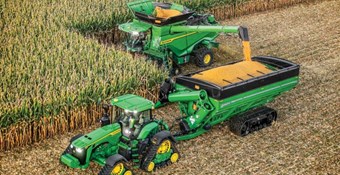
Midgley says that farmers are to some extent also contributing to the problem as they make use of fuel and electricity. She advises that farmers should try and become more efficient with energy use and try to shift from using fossil fuels and diesel, et cetera, and rather make use of, for example, electric vehicles. She does, however, admit that this will not be an easy shift.
“Agriculture also contributes to the problem by disturbing the soil, burning residue… and all of that also releases gases into the atmosphere that are targeting the problem. Globally about a quarter of the gas emissions that are causing the warming are coming from agriculture. A large part of that is from ploughing and land-use change – like cutting down trees to make way for agricultural land use. We have to reduce doing that as well,” says Midgley.
She further describes agriculture as an interesting sector as farmers need to play their part in reducing gas emissions, while also having to adapt. “Doing [these] things hand in hand, we’ll have to be innovative in how we’re going to do that.”
Furthermore, there is a lot of talk in the farming community regarding some of the incentives that are available for using soil to absorb carbon dioxide. This means putting back into the soil what has been released into the atmosphere. Midgley says that plants are able to absorb carbon and putting it back into the soil. Cover crops would be perfect for this.
Meanwhile, OFM News recently reported that Midgley suggested that farmers should speak to people that are knowledgeable on the signs of climate change as well as the technology that is available for farmers.
She also stated that measuring the carbon dioxide footprints on farms is also an important step to becoming more aware of the issue.
OFM News