Agri Hour
#Agbiz: SA farmers' intention to plant point to prospects of yet another large crop─── 05:00 Wed, 03 Nov 2021

As usual on the Agri Hour, Wandile Sihlobo, chief economist at the Agricultural Business Chamber of South Africa, Agbiz, provides a weekly insert about the latest on the global as well as South African agricultural markets.
He also provides more information about the latest developments in the agricultural sector.
See PODCAST below
In this week’s segment, Sihlobo takes a look at South African farmers' planting intentions for the 2021/22 production season.
“We have long held an optimistic view about the 2021/22 production season. The robust tractor sales since the start of the year, prospects of yet another La Niña, and relatively higher commodity prices convinced us that South African farmers would likely maintain an area planting for summer grains and oilseeds of over 4,2 million hectares.
“The data released by the Crop Estimates Committee (CEC) last week concurs with this view. The CEC indicates that South African farmers intend to plant a total area of 4,34 million hectares of summer grains and oilseeds. This is up by 5% from the 2020/21 production season.
“A deep dive into the numbers show a mixed picture, albeit broadly positive. For example, the 2021/22 maize planting intention is 2,73 million hectares, down by 1% year-on-year (y/y) (but well above the 10-year average area of 2,53 million hectares).
“Sorghum area is also set to fall by 9% y/y to 45 000 hectares (well below the 10-year average of 52 237 hectares). The groundnuts area is set to decline by 4% from the 2020/21 production season to 37 000 hectares (lower than the 10-year average of 43 348 hectares).
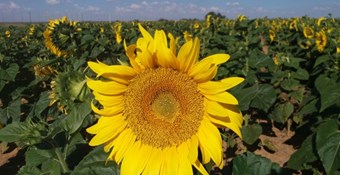
“Meanwhile, sunflower seed, soybeans, and dry beans area plantings are set to increase by 16%, 12%, and 14% from the 2020/21 production season to 555 800, 924 800, and 54 250 hectares, respectively,” says Sihlobo.
He shares that these are welcome developments as some feared that the rising input costs – fertiliser and agrochemicals – would potentially discourage plantings.
“Admittedly, as promising as the planting intentions data are, the higher input costs will pare the farmers' profits this year from the past season. To illustrate the rise in input costs, consider the herbicides such as glyphosate, atrazine, and metolachlor; their prices were up by 99%, 33% and 32% respectively, in September 2021, compared with the corresponding period last year.
“The same trend persists in major fertilisers such as ammonium nitrate, urea, and potassium chloride, whose prices were up by 107%, 58% and 125%, respectively, in September 2021 compared with the same time last year.
“These overall increases are on the back of supply constraints and disruptions in production lines in major global fertiliser and agrochemical producing countries like China, India, the United States, Russia, and Canada. The rising shipping costs and oil prices have also contributed to these price surges, along with firmer global demand from an expanding agricultural sector,” he adds.
However, he further states that these headwinds are beyond the farmers' control as the price increases reflect the global market conditions rather than the domestic picture.
“Notably, South Africa imports about 80% of its annual fertiliser consumption and is a minor player globally, accounting for a mere 0.5%. Local prices tend to be influenced by developments in the major producing and consuming countries mentioned above.
“Much of the fertiliser imported by South Africa is utilized in summer grain and oilseed production. Fertiliser constitutes about 35% of grain farmers' input costs and a substantial share in other agricultural commodities and crops.
“In sum, we are still in the early days as the planting activity has recently started in the eastern and central regions of South Africa. Still, the higher tractor sales, favourable weather outlook for the season, and the farmers' optimism through the intentions to plant data compel us to believe that South Africa could have yet another good crop in the 2021/22 production season,” concludes Sihlobo.
OFM News
OFM News