
Central SA
SANBS targets 6,000 units in one-day campaign ahead of holidays─── ZENANDE MPAME 11:44 Fri, 27 Mar 2026

The Easter holidays are usually one of the busiest times of the year when many people are travelling.
The long weekend is often associated with trauma and accidents, and a lot of blood is needed. As the Easter holidays approach, the South African National Blood Service has urged citizens to donate blood on Saturday (28/3), with a target of collecting 6,000 units in one day.
Despite the holidays, hospitals still rely on a steady blood supply to treat trauma patients, perform surgeries, and support those with cancer and chronic illnesses. Public holidays often place pressure on blood stocks as fewer donors visit collection sites.
School holidays have historically been associated with low stock levels since students make up a sizable portion of the country's donor population. So, this one-day donor campaign will assist the SANBS in increasing the collection of blood before the school holidays and during the school holidays.
Donated blood is divided into red blood cells, plasma, and platelets; each unit of blood can save at least three lives.
“During this time, many people are travelling, spending time with family, and taking a break,” said Free State and Northern Cape donor relations head Jana Wallace. “But in hospitals, there is no break. Patients are still arriving from accidents, and surgeries are still taking place.

“Someone's life may depend on a blood donation; just one unit of blood can save up to three lives. Behind every donation is a real person, a child fighting illness, a mother in recovery, a patient waiting for a second chance, and that help can come from you.”
Donating blood takes about half an hour, but the impact can last a lifetime, she said. Potential donors between the ages of 16 and 75, who weigh 50kg or more, are in good general health and lead a safe sexual lifestyle, may be eligible to donate blood.
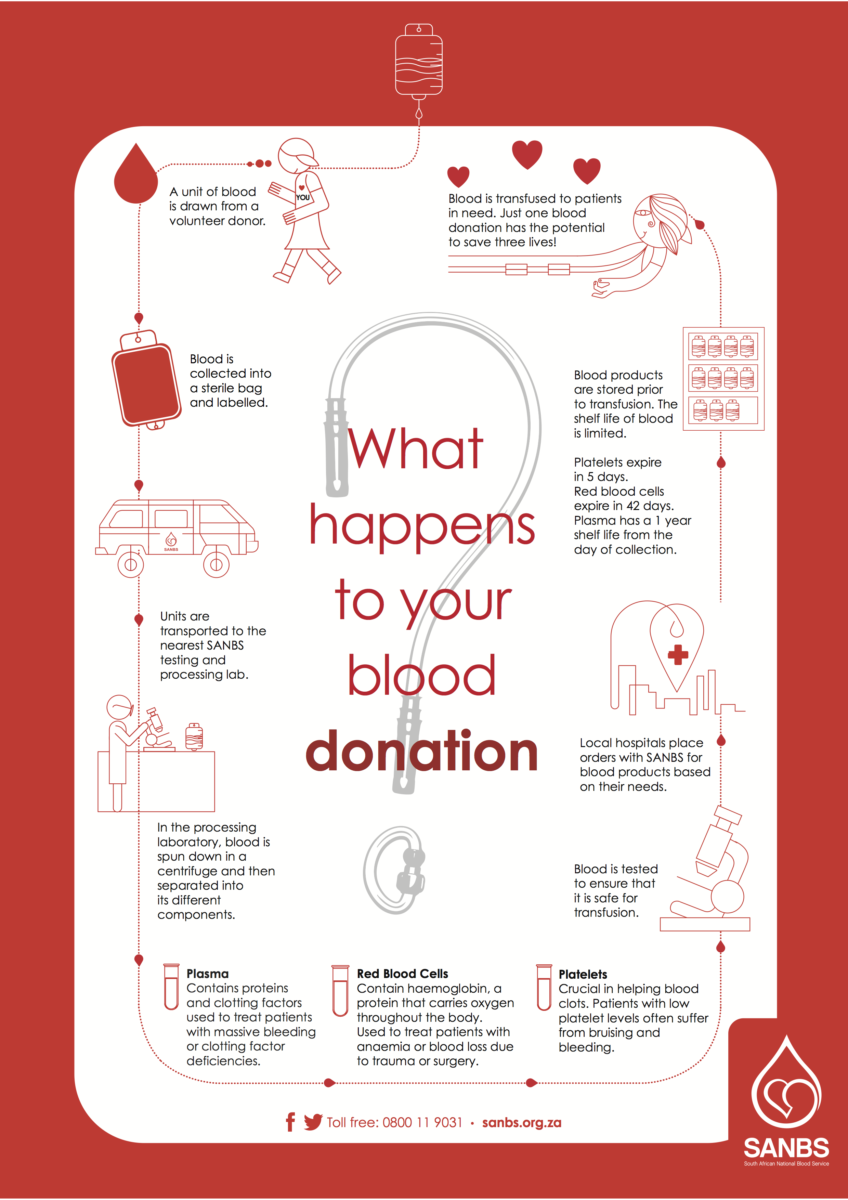
Every unit of donated blood can save at least three lives. Photo: sanbs.org.za
Donating blood is also a great way for young people to learn more about their health. The screening process before donation includes checks for blood pressure, haemoglobin levels, and other vital signs, providing valuable health insights at no cost.
“When you donate blood, you are not just giving blood, you are giving hope, you are giving time, and you are giving life. Answer the call this Easter.”
• Have a news tip to share? Phone or whatsapp the OFM News Hotline: 066 487 1427.