
South Africa
January marks Cervical Cancer Awareness Month as experts warn women remain at risk─── ZENANDE MPAME 12:50 Wed, 28 Jan 2026

January marks Cervical Cancer Awareness Month, placing renewed focus on a disease that remains one of South Africa’s leading causes of cancer-related deaths among women.
Health experts warn without urgent action, preventable illnesses and deaths will continue to rise, particularly among women living with HIV and those who never received the human papillomavirus (HPV) vaccine. Cervical cancer is the second most common cancer among South African women.
The World Health Organisation’s 90-70-90 targets aim for 90% of girls to be vaccinated against HPV by age 15, 70% of women to be screened at ages 35 and 45, and 90% of women diagnosed with cervical disease to receive treatment by 2030. While the national HPV vaccination programme, introduced in 2014, targets girls aged nine to 15, MSD South Africa managing director Zweli Bashman said a large cohort of women remains unprotected.
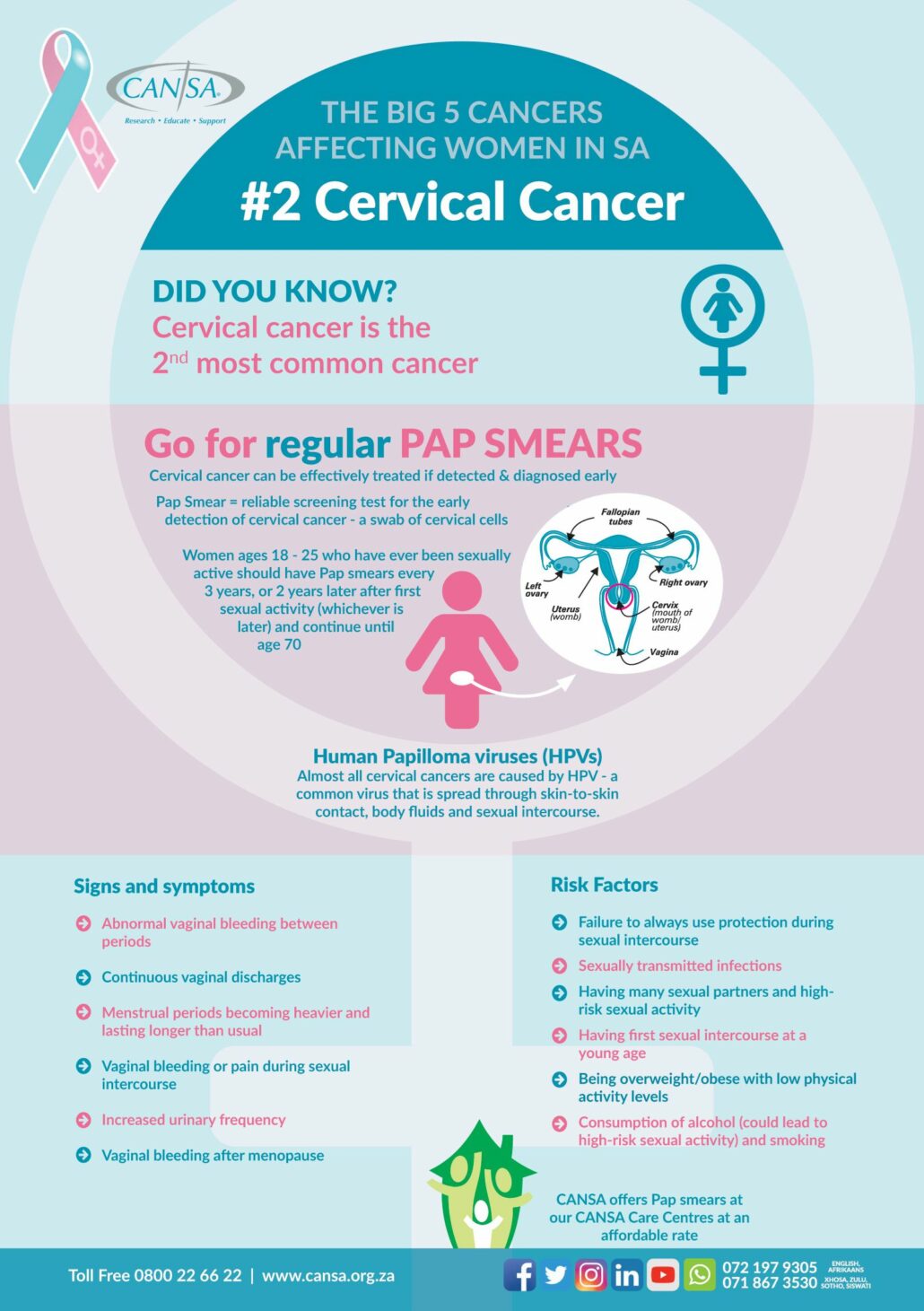
Cervical cancer can be prevented through vaccination. Photo: cansa.org.za
“Cervical cancer can be prevented through vaccination, early screening, and timely treatment. That is why it is so concerning that it remains one of the biggest cancer killers of women in South Africa.
“The vaccination programme focuses on a primary age group, but the natural next step is to expand protection to at-risk groups, particularly women living with HIV, who face a much higher risk of developing cervical cancer.”
When cervical cancer is detected early, it can often be treated with lower-cost and less invasive interventions. Late diagnosis not only impacts quality of life but also places a significant burden on the healthcare system, he said.
Primary cause of cervical cancer
HPV is the primary cause of cervical cancer in women, resulting in 300,000 deaths due to cervical cancer globally every year, according to Cansa. Having regular Pap smears can detect abnormal cells in the cervix, which could develop into cervical cancer.
Early diagnosis and treatment of pre-cancerous cuts prevent up to 80% of cervical cancers in high-resource countries, where cervical cancer screening is routine.
“When women are lost to a preventable disease like cervical cancer, the impact on families and the economy is immense,” said Bashman. “I would urge women to speak to their healthcare practitioners whenever they have the opportunity.
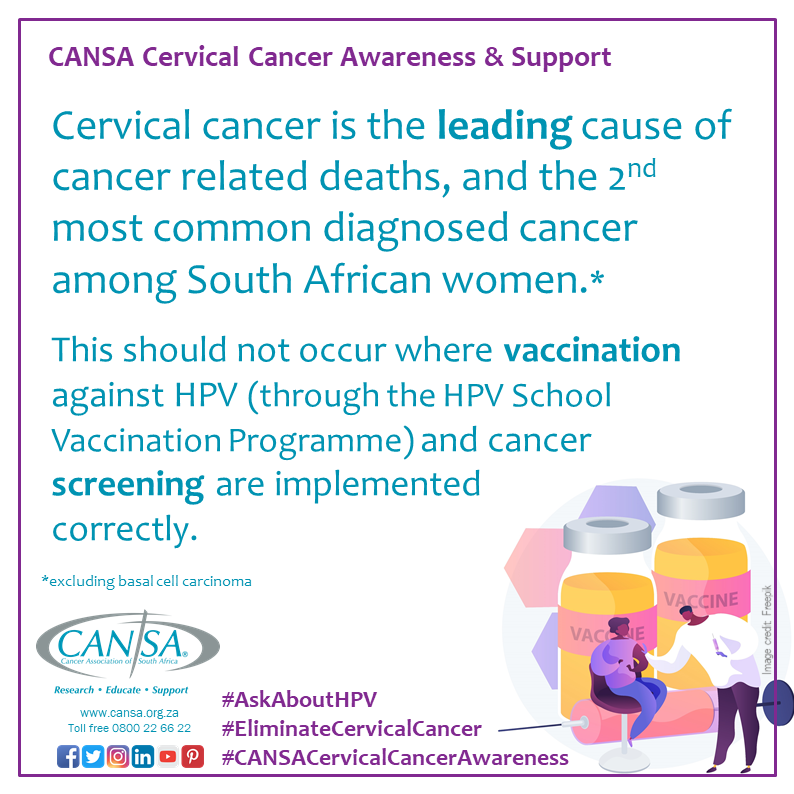
Cervical cancer is the second most common cancer. Photo: cansa.org.za
“To parents, when permission slips are sent home for HPV vaccinations, parents should take the time to read them, ask questions, and give consent.”
Low vaccination rates are often not due to lack of access or cost, but because consent is not given. By choosing vaccination, parents are protecting their children from entirely preventable cancers, he said.
• Het jy ’n nuuswenk om te deel? Bel of whatsapp die OFM Nuus-lyn: 066 487 1427