
Central SA
Understanding Alzheimer’s and dementia─── ZENANDE MPAME 09:03 Tue, 21 Apr 2026

Dementia is often misunderstood as a normal part of ageing, but experts stress it is a medical condition requiring awareness, compassion, and informed care.
Dementia is an umbrella term describing a group of symptoms caused by diseases that damage the brain. These diseases, known as neurodegenerative conditions, lead to the gradual death of brain cells, disrupting communication between the brain and the body.
Alzheimer’s disease is the most common form of dementia worldwide. It specifically destroys brain cells responsible for memory, language, and reasoning, which is why early signs often include forgetting recent events, struggling to find words, or repeating questions.
Dementia is progressive, meaning symptoms worsen over time, and there is currently no cure despite ongoing global research. In 2021, 57-million people had dementia worldwide, over 60% of whom live in low-and middle-income countries, according to the World Health Organisation.
World Alzheimer’s Day, which is observed annually on 21 September, plays a critical role in educating communities.
“Dementia is not a normal part of ageing; it is a progressive condition caused by diseases that damage the brain and affect how a person thinks, communicates, and lives,” said Free State Association for Dementia and Alzheimer’s of South Africa regional manager and social worker Thakane Raditapole.
“Alzheimer’s disease is the most common form of dementia, and while there is currently no cure, early awareness and understanding can make a meaningful difference in how we support those affected.”

Compassionate communication is key; even when words fail, people living with dementia still understand emotions, body language, and the presence of those who care for them, she said.
Early warning signs of dementia include memory loss that disrupts daily life, language difficulties, mood swings, poor judgement, getting lost in familiar places, and even becoming suspicious of others. While some forgetfulness is part of normal ageing, dementia symptoms are more severe and interfere with independence.
Creating dementia-friendly communities is important to lessen stigma and protect vulnerable people, especially elderly women who are frequently abused. Families and caregivers can be empowered by awareness campaigns, support groups, and easily accessible information.
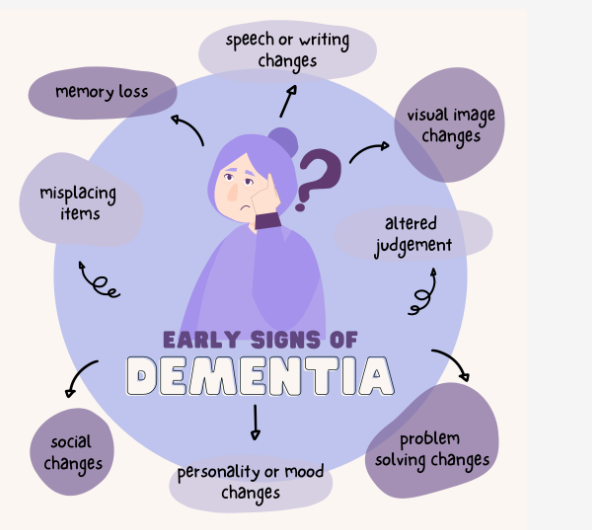
Early warning signs of dementia. Photo: alzbuddies.org
“Alzheimer’s is often called a family disease because its impact extends far beyond the individual, affecting the emotional, physical, and mental well-being of everyone involved,” said Raditapole.
“When one person develops dementia, the whole family begins a journey of adjustment, care, and resilience, carrying the weight of the disease together.”
Dementia is not a hidden condition anymore. By talking about it, we create understanding, compassion, and better support for those affected.
• Have a news tip to share? Phone or whatsapp the OFM News Hotline: 066 487 1427.