Agri Hour
#Agbiz: SA’s agriculture performance rests on weather prospects─── ELSABÉ RICHARD 05:30 Tue, 10 Nov 2020

As usual on the Agri Hour, Wandile Sihlobo, chief economist at the Agricultural Business Chamber of South Africa, Agbiz, provides a weekly insert about the latest on the global as well as South African agricultural markets.
He also provides more information about the latest developments in the agricultural sector. Here is Sihlobo...
See PODCAST below
Sihlobo says every year, the period between October and February is marked as the most crucial time for South Africa’s summer crop, some horticulture products, as well as the livestock sector. He says this period is a summer rainfall period and therefore a determinant of veld conditions and the season’s harvest. He adds that the 2020/21 production season commenced at the beginning of October 2020 with prospects of above-normal rainfall in most regions of the country - which means a possibility of a large harvest. Sihlobo says while October was set to experience below-normal rainfall, the La Niña induced higher rainfall set to begin from November. The benefit of this rainfall is evident in improved soil.
“The improved soil moisture, primarily in KwaZulu-Natal, central and northern Eastern Cape, eastern Free State and parts of Mpumalanga will help accelerate planting activity, which is already underway,” says Sihlobo. With that being said, the optimal planting window for maize and soybeans closes in the week of 20 November 2020 in the eastern regions of South Africa, while remaining open for the central and western regions until mid-December. Sihlobo adds that for the eastern regions, this means that the areas that will manage to complete plantings within the next two weeks, could have its crop benefit from improved soil moisture on the back of the early La Niña rainfall.
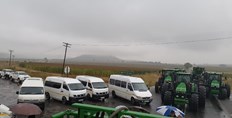
Furthermore, Sihlobo says farmers have also been encouraged by the favourable weather prospects following the reports of their intention to lift South Africa’s summer crop area plantings by 5% year-on-year (y/y) to 4.15 million hectares, as stated in Agbiz’s note of 2 November 2020. He says while they do not have the comprehensive seed sales data yet, other indicators which Agbiz have continued to monitor is tractor sales.
He says sales have remained strong between June and October this year, which is higher than last year. According to Sihlobo this too illustrates farmers’ optimism about the 2020/21 summer crop production season. “The improved financial conditions following the second-largest summer crop harvest on record in the 2019/20 production season, coupled with higher commodity prices, have also contributed to higher tractor sales and intentions to increase plantings in the 2020/21 season,” explains Sihlobo.
With all these positive prospects, the high-frequency weather-related data continues to paint a positive outlook for South Africa’s agricultural sector. Lastly, Sihlobo mentions that the next four months will, however, need to be monitored regularly as that will be a crucial period for all summer crops - from planting to pollination. “Any deviation of the actual weather conditions from the current expectations will have an impact on the outlook view that we have been communicating over the past few weeks,” says Sihlobo.
OFM News