
Central SA
Early Alzheimer’s diagnosis can give families more control─── ZENANDE MPAME 12:06 Wed, 02 Sep 2026

Families are being encouraged to recognise the warning signs of dementia and seek professional help early as South Africa observes World Alzheimer’s Month throughout September.
The 2026 theme from Alzheimer’s Disease International is The Earlier You Know, the More You Can Do: a Dementia Diagnosis Matters. This highlights the importance of identifying changes in memory, behaviour, and daily functioning as early as possible.
Alzheimer’s disease is the most common form of dementia worldwide, while others include vascular dementia, dementia with Lewy bodies and frontotemporal dementia.
World Alzheimer’s Day will be observed on Monday, 21 September. Free State Association for Dementia and Alzheimer’s of South Africa regional manager and social worker Thakane Raditapole said dementia is not a normal part of ageing. Dementia is an umbrella term describing a syndrome, or group of similar symptoms, caused by diseases that damage the brain.
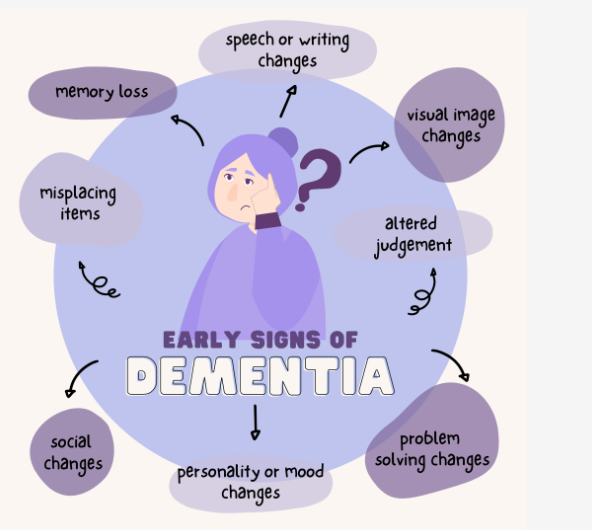
The common early warning signs of dementia. Photo: alzbuddies.org
Raditapole uses ALZHEIMER’S as a mnemonic to help families remember some of the warning signs:
A – Alzheimer’s and memory loss: Memory loss that disrupts daily life, especially forgetting recent information.
L – Language problems: Difficulty following or joining conversations, finding words, naming objects, or stopping mid-conversation.
Z – Zips and buttons: Difficulty fastening clothing, including zips and buttons.
H – Hygiene: Neglecting personal hygiene or no longer wanting to bathe.
E – Extreme mood swings: Sudden changes in mood without an apparent reason.
I – Impaired judgement: Unusual or inappropriate decisions and behaviour.
M – Misorientation: Getting lost in familiar places or losing track of dates, seasons and time.
E – Even recognition: Difficulty recognising family members and friends.
R – Recent memories: Difficulty remembering things that happened that day or recent conversations and events.
S – Suspiciousness: Becoming suspicious of others or accusing people of stealing or hiding things.
“These diseases damage brain cells and interfere with communication between the brain and the rest of the body. Dementia is progressive, meaning symptoms generally worsen over time, and there is currently no cure.
“The three major symptoms of dementia include memory loss, difficulty making decisions or reasoning, and problems with communication.
“Other conditions, including vitamin deficiencies, thyroid problems, depression, and medication side effects, can cause similar symptoms.

“Early diagnosis can give families time to plan for future care, finances and legal wishes, while ensuring that the person living with dementia receives appropriate support.”
Raditapole encouraged families to approach the subject with compassion rather than criticism. Compassionate communication remains important throughout a person’s dementia journey, while families and caregivers also need support and education.
• Have a news tip to share? Phone or whatsapp the OFM News Hotline 066 487 1427.