
Health
Servikale kankerbewusmaking met Kansa─── 09:00 Wed, 04 Oct 2023

Servikale kanker is die tweede mees algemene kanker onder Suid-Afrikaanse vroue, maar die kanker waaraan die meeste vroue in ons land sterf.
Yolanda Maartens van Mid-Morning Magic praat met Vlooi Venter, kliniese verpleegspesialis by die Kankervereniging van Suid-Afrika (Kansa), oor servikale kanker.
Wat is die rol van HPV (Menslike Papiloom Virus) in die ontwikkeling van servikale kanker en wat is die tekens en simptome daarvan? Vlooi vertel ook wat die behandeling van servikale kanker behels.
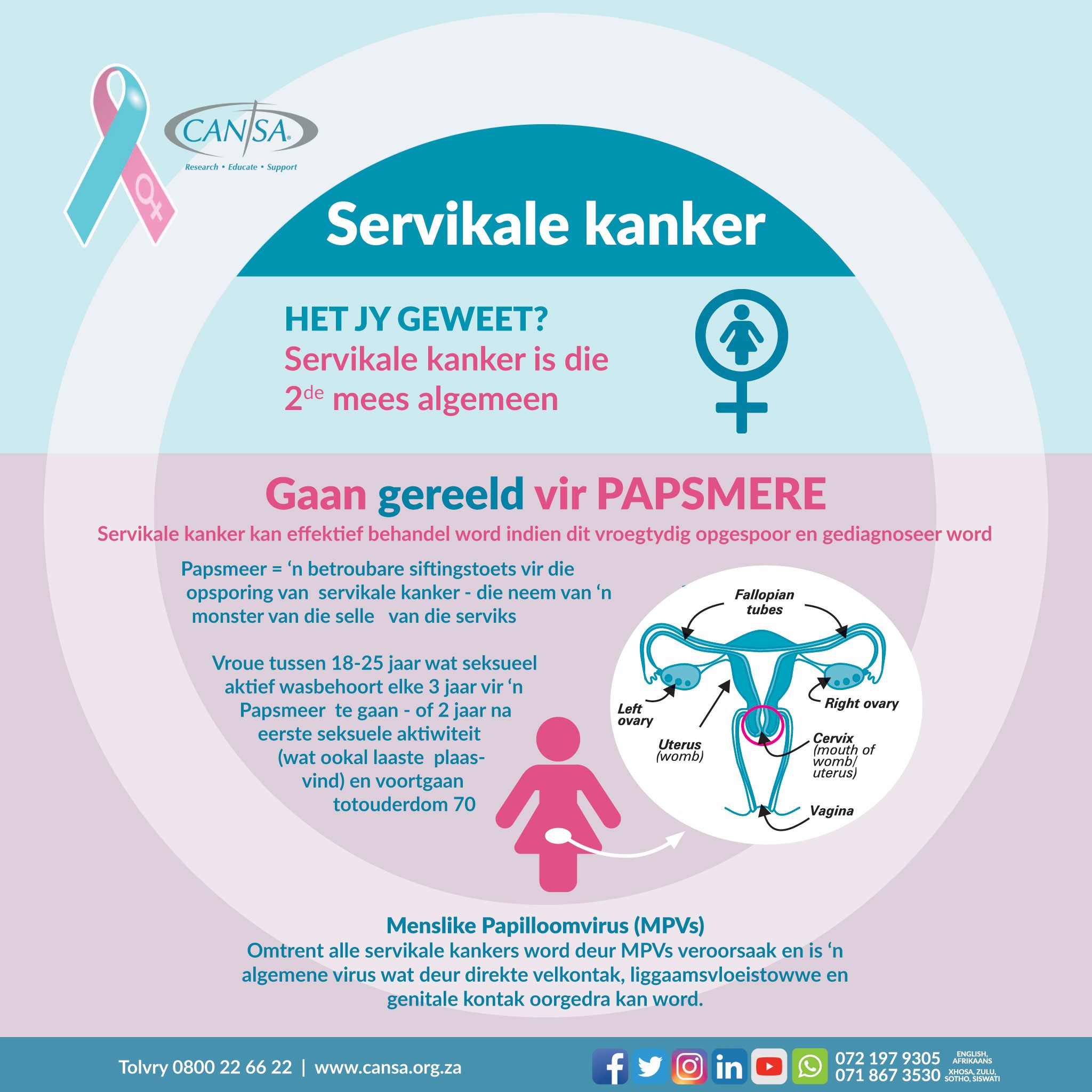
Vir meer inligting besoek Kansa se webtuiste by www.cansa.org.za
Bel Kansa se hulplyn by 0800 66 00 66 of stuur ’n e-pos na VlooiVenter by vventer@cansa.org.za
What is Cervical Cancer?
Cervical cancer is a malignant neoplasm arising from cells originating in the cervix. Cervical cancer is a disease in which cells in the cervix become malignant (cancerous). The two main types of cells covering the cervix are squamous cells (on the exocervix) and glandular cells (on the endocervix). The place where these two cell types meet is called the transformation zone. Most cancers start in the transformation zone of the cervix.
Cervical cancer is usually a slow-growing cancer that may not have immediate symptoms but can be found with regular Pap smear tests (a procedure in which cells are scraped from the cervix and looked at under a microscope). Cervical cancer is almost always caused by Human Papillomavirus (HPV) infection.
Cervical cancer starts as a pre-cancerous condition called dysplasia. This pre-cancerous condition can be detected by a Pap smear and is 100% treatable. That is why it is so important for women to get regular Pap smears done. Most women who are diagnosed with cervical cancer today have not had regular Pap smears or they have not followed up on abnormal Pap smear results.
Undetected pre-cancerous changes can develop into cervical cancer. From there it can spread to the bladder, intestines, lungs, and liver. It can take several years for pre-cancerous changes to turn into cervical cancer. Patients usually start experiencing problems when the cancer is already advanced and has spread.
Cervical cancer tends to appear during midlife. Over half of the women diagnosed are between 35 and 55 years old. It rarely occurs in women under 20 and only 20% of the infected women are over 65 years.

The cervix is the lower, narrow end of the uterus (the hollow, pear-shaped organ where a foetus can grow). The cervix leads from the uterus to the vagina (birth canal) below.
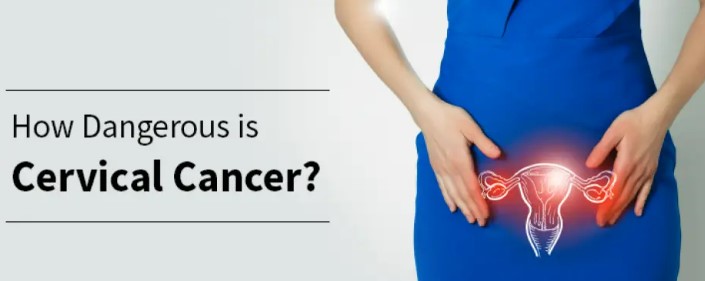
Cervical cancer is the 2nd most common cancer among South African women, but the cancer women die of most in our country. Women in South Africa have a 1 in 42 lifetime risk of cervical cancer (NCR 2019).
A new registry to record stats around cervical cancer was established in South Africa in 2022.