
South Africa
Health groups call for action on rheumatic heart disease this awareness week─── ZENANDE MPAME 15:38 Tue, 04 Aug 2026

Health organisations are calling for earlier diagnosis and treatment of bacterial infections to prevent avoidable heart-valve damage among children and young adults.
These organisations are urging parents and healthcare workers to treat common bacterial infections early to prevent lifelong heart-valve damage among children and young adults. Rheumatic Fever Week is observed from Saturday (1/8) to Friday.
The Heart and Stroke Foundation SA and the SA Heart Association are calling for earlier diagnosis, appropriate treatment and continued care. The campaign forms part of the South African department of health’s 2026 health awareness calendar.
Acute rheumatic fever is an inflammatory immune response that can develop after an infection with group A Streptococcus, commonly called Strep A. It often affects school-aged children and can emerge between one and five weeks after the initial infection.

The illness can eventually cause rheumatic heart disease, which damages the heart valves and may only be detected when a person reaches young adulthood. Early recognition and treatment of the initial bacterial infection can prevent many cases.
Rheumatic heart disease is largely preventable, but vulnerable communities often face greater barriers to healthcare, Heart and Stroke Foundation South Africa chief executive Prof. Pamela Naidoo said. Parents who recognise the symptoms and seek treatment quickly can help prevent permanent damage.
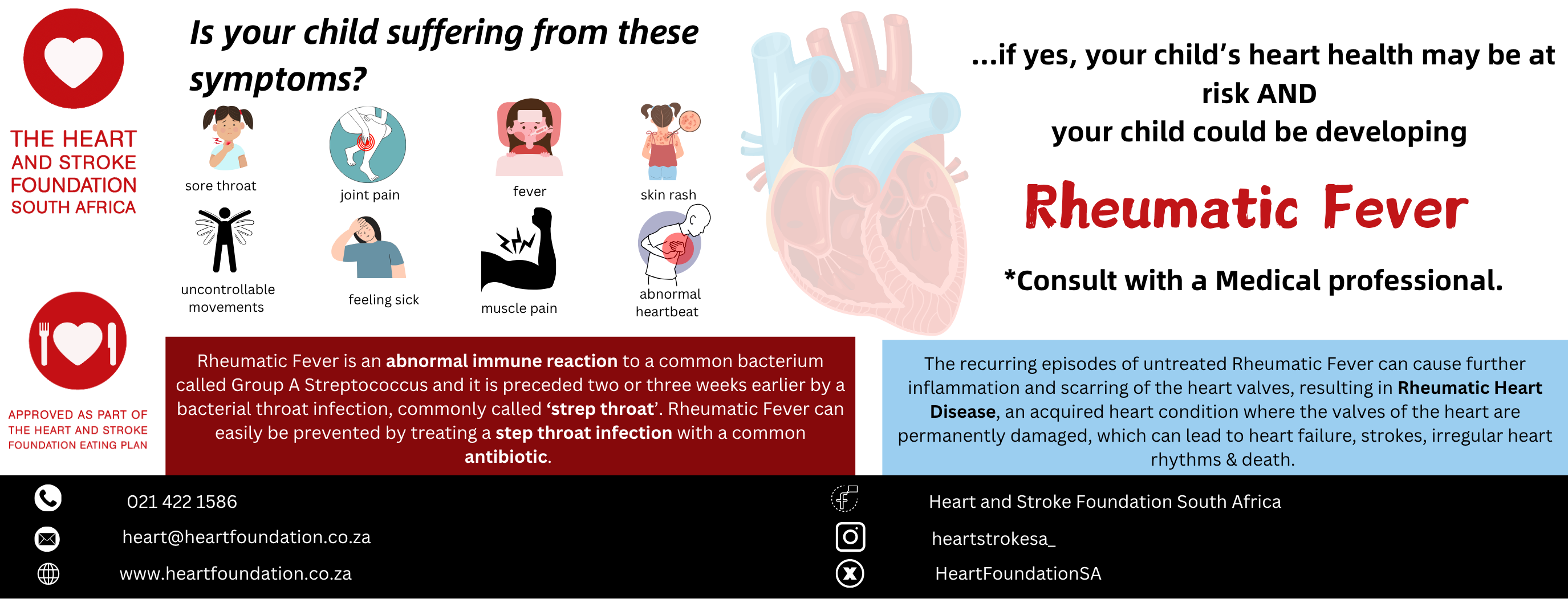
Rheumatic Fever Week is observed from Saturday (1/8) to Friday. Photo: Facebook/Heart and Stroke Foundation South Africa
The organisations want to reduce the number of children and young adults diagnosed with the condition and ultimately eradicate it. The World Health Organisation estimates about 55-million people worldwide live with rheumatic heart disease, while approximately 360,000 die annually.
Poverty, overcrowding, poor sanitation, limited access to clean water and healthcare inequalities contribute to the disease’s continued prevalence in South Africa. Long distances and other obstacles can prevent vulnerable communities from reaching clinics, despite the availability of essential medicines and healthcare facilities.
The organisations are calling for greater public awareness, easier access to primary healthcare, and reliable antibiotic supplies so infections can be treated promptly. They also want stronger referral systems and continued care for people already living with rheumatic heart disease.
Ongoing treatment and monitoring can reduce the risk of further heart damage and serious complications. Parents are encouraged to seek medical care when children develop symptoms after a sore throat or another suspected Strep A infection.
• Do you have a news tip to share? Call or whatsapp the OFM News line: 066 487 1427.